
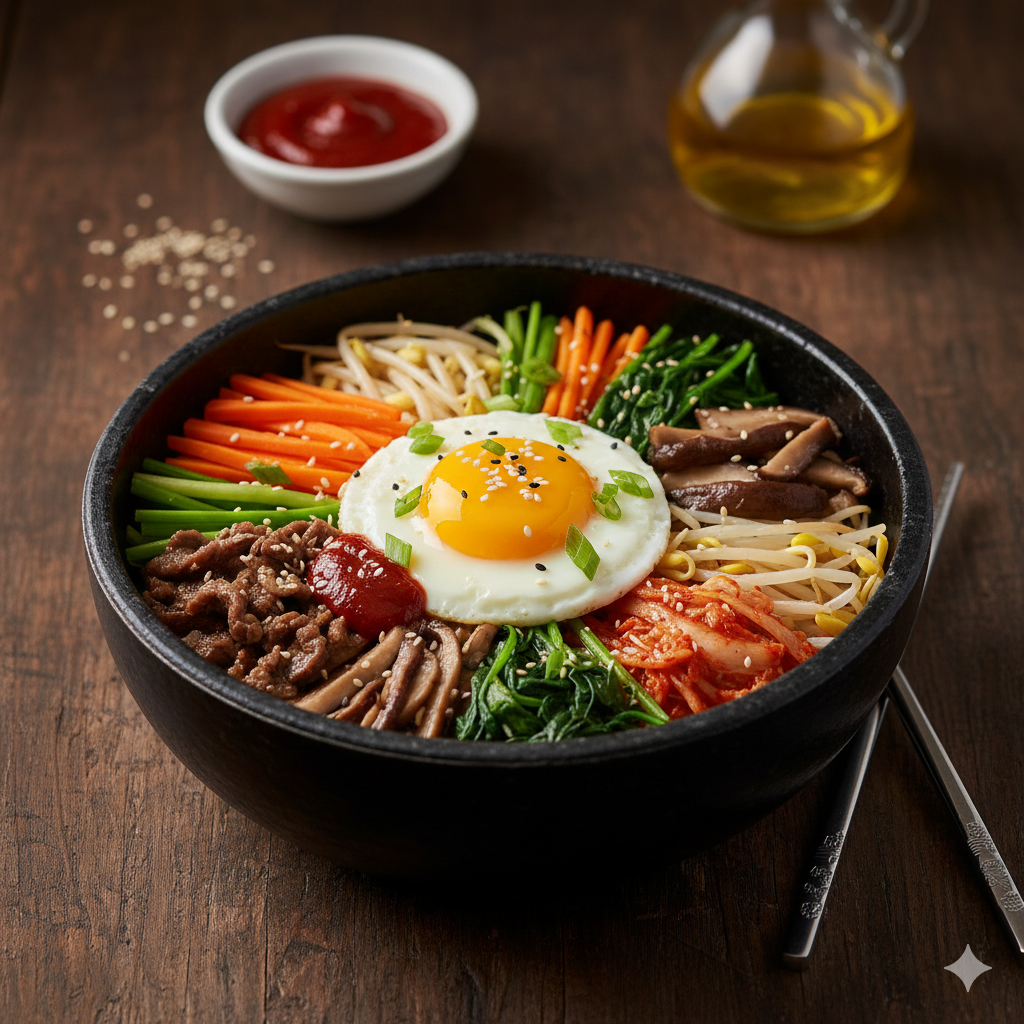
Korean Bibimbap is one of the most famous dishes from Korea, known for its vibrant colors, balanced nutrition, and delicious taste. The word “Bibimbap” means “mixed rice,” and the dish is prepared by serving rice topped with vegetables, protein, and sauce, then mixing everything together before eating. Bibimbap is not only visually appealing but also a healthy and satisfying meal enjoyed around the world.
🌍 Why Korean Bibimbap Is Popular Worldwide
Bibimbap has gained international popularity because it is healthy, customizable, and full of flavor. It combines carbohydrates, protein, and vegetables in one bowl, making it a complete meal. People who enjoy balanced and colorful food often choose bibimbap for its nutrition and freshness.
Its simple preparation and flexibility make it suitable for different dietary preferences.
🥗 What Makes Korean Bibimbap Special?
Bibimbap is special because of its variety. Each ingredient is prepared separately and arranged neatly over rice. When mixed, the flavors blend perfectly, creating a satisfying taste and texture. The dish focuses on balance, both in nutrition and appearance.
The contrast of warm rice, fresh vegetables, and flavorful sauce makes bibimbap unique among international recipes.
🥘 Ingredients Used in Korean Bibimbap
Here are the common ingredients used in a traditional bibimbap bowl:
- Steamed white rice
- Carrots (julienned)
- Spinach
- Cucumber
- Mushrooms
- Bean sprouts
- Fried or boiled egg
- Chicken, beef, or tofu (optional)
- Sesame oil
- Salt and pepper
- Bibimbap sauce or chili paste (optional)
These ingredients are nutritious, fresh, and easy to prepare at home.
👩🍳 How to Make Korean Bibimbap at Home
Step 1: Prepare the Rice
Cook white rice and keep it warm.
Step 2: Prepare Vegetables
Lightly sauté or blanch vegetables separately. Season with a little salt and sesame oil.
Step 3: Cook Protein
Cook chicken, beef, or tofu with light seasoning if using.
Step 4: Fry the Egg
Fry an egg sunny-side up or boil it according to preference.
Step 5: Assemble the Bowl
Place rice in a bowl. Arrange vegetables and protein neatly on top.
Step 6: Add Sauce and Mix
Add sauce or seasoning, mix well, and enjoy.
🥗 Nutritional Benefits of Korean Bibimbap
Bibimbap is one of the healthiest rice-based dishes:
- Balanced Nutrition: Rice, vegetables, and protein in one meal
- Rich in Fiber: Vegetables support digestion
- Protein Source: Egg, meat, or tofu helps muscle health
- Low Oil: Light cooking keeps calories controlled
🌱 Variations of Korean Bibimbap
Bibimbap can be prepared in many ways:
- Vegetable-only bibimbap
- Chicken bibimbap
- Beef bibimbap
- Tofu bibimbap
- Spicy bibimbap
Each version keeps the colorful and nutritious nature of the dish.
🍽️ Best Time to Enjoy Korean Bibimbap
Bibimbap is ideal for lunch or dinner. It is filling but not heavy, making it perfect for daily meals. Many people also enjoy it as a healthy alternative to fast food.
🔥 Tips for Perfect Korean Bibimbap
- Use fresh vegetables for better texture
- Arrange ingredients neatly for visual appeal
- Do not overcook vegetables
- Mix well before eating for full flavor
🌟 Why Korean Bibimbap Is Loved by All Ages
Korean Bibimbap is loved by people of all ages because it is colorful, mild, and nutritious. Children enjoy the rice and egg, while adults appreciate the variety of vegetables and balanced taste. Its customizable nature makes it suitable for everyone.
✅ Conclusion
Korean Bibimbap is a healthy, colorful, and flavorful rice dish that represents the beauty of Korean cuisine. Easy to prepare and packed with nutrients, it is a perfect addition to any international food recipe blog. Adding bibimbap to your content gives readers a wholesome and visually appealing meal option from world cuisine.




Leave a Reply