

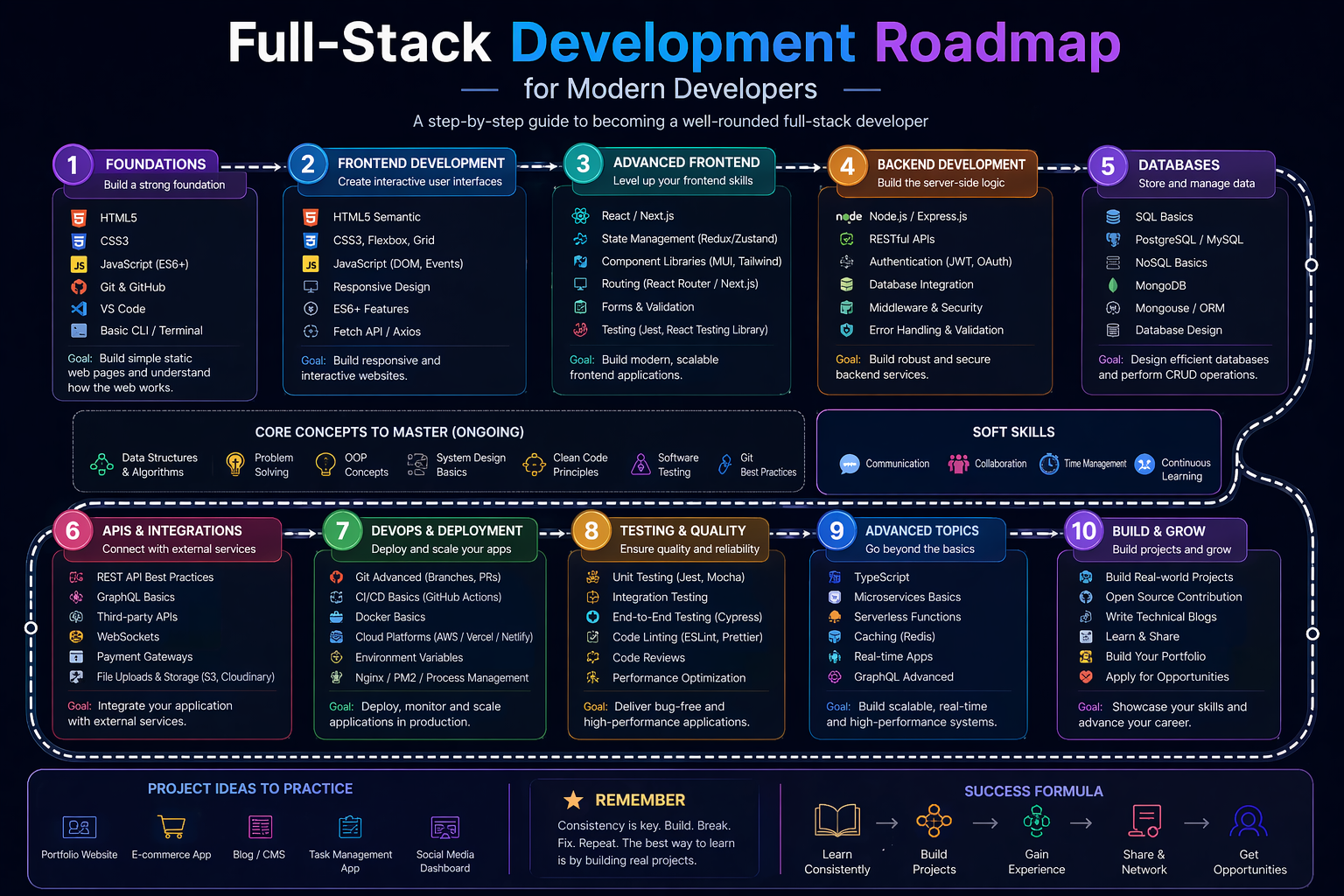
Backend Development and Serverless Architecture Explained
Author: Malik Mohsin Saleem Khan
Introduction
Backend development is the foundation of every modern web application. While users interact with the frontend, the backend is responsible for handling data, logic, authentication, and system communication. Without a strong backend, even the most beautiful frontend cannot function properly.
In recent years, backend development has undergone a major transformation with the rise of cloud computing and serverless architecture. Developers no longer need to manage physical servers or complex infrastructure. Instead, they can focus on writing business logic while cloud providers handle scaling, deployment, and maintenance.
This article provides a complete, in-depth explanation of backend development and serverless architecture, helping you understand how modern applications are built, deployed, and scaled in 2026.
Understanding Backend Development
Backend development refers to the server-side part of web applications. It is responsible for managing data, processing requests, and ensuring that everything works behind the scenes.
Core Responsibilities of Backend Development
Backend developers handle several critical tasks, including:
- Managing databases and data storage
- Handling user authentication and authorization
- Processing client requests
- Building and maintaining APIs
- Ensuring application security
- Managing server logic and business rules
Backend vs Frontend
To understand backend development clearly, it is important to differentiate it from frontend development:
- Frontend: What users see and interact with
- Backend: What powers the application behind the scenes
Both work together to create a complete web application experience.
Key Technologies in Backend Development
Backend development relies on several programming languages, frameworks, and tools.
Popular Backend Programming Languages
- JavaScript (Node.js)
- Python (Django, Flask)
- Java (Spring Boot)
- PHP (Laravel)
- Go (Golang)
- Ruby (Ruby on Rails)
Backend Frameworks
Frameworks simplify backend development by providing pre-built structures and tools:
- Express.js
- Django
- Spring Boot
- Laravel
- NestJS
Why Frameworks Matter
Frameworks help developers:
- Reduce development time
- Improve code structure
- Enhance security
- Maintain scalability
Databases in Backend Development
Databases are a core component of backend systems. They store, organize, and manage application data.
Types of Databases
Relational Databases (SQL)
- MySQL
- PostgreSQL
- SQLite
These use structured tables and relationships.
Non-Relational Databases (NoSQL)
- MongoDB
- Firebase
- Cassandra
These are flexible and ideal for unstructured data.
Choosing the Right Database
The choice depends on:
- Application size
- Data structure
- Performance requirements
- Scalability needs
APIs and Their Importance
APIs (Application Programming Interfaces) are essential for communication between frontend and backend systems.
What is an API
An API allows different software systems to communicate with each other.
Types of APIs
- REST APIs
- GraphQL APIs
- SOAP APIs
Why APIs Matter
- Enable frontend-backend communication
- Allow integration with third-party services
- Improve modular system design
- Support mobile and web applications
Introduction to Serverless Architecture
Serverless architecture is a modern cloud computing model where developers do not manage servers directly. Instead, cloud providers handle infrastructure automatically.
What “Serverless” Really Means
Serverless does NOT mean there are no servers. It means developers do not manage them.
Cloud providers like AWS, Google Cloud, and Azure handle:
- Server management
- Scaling
- Maintenance
- Security updates
How Serverless Architecture Works
Serverless architecture is based on event-driven execution.
Basic Workflow
- A user sends a request
- The cloud provider triggers a function
- The function executes code
- The result is returned to the user
Function as a Service (FaaS)
FaaS is the core concept behind serverless systems. Examples include:
- AWS Lambda
- Google Cloud Functions
- Azure Functions
Benefits of Serverless Architecture
Serverless architecture offers several advantages for modern developers.
a. No Server Management
Developers do not need to configure or maintain servers.
b. Automatic Scaling
Applications scale automatically based on traffic demand.
c. Cost Efficiency
You only pay for actual usage, not idle server time.
d. Faster Development
Developers focus on writing functions instead of infrastructure.
e. High Availability
Cloud providers ensure uptime and reliability.
Limitations of Serverless Architecture
Despite its benefits, serverless also has limitations.
a. Cold Start Delay
Functions may take time to initialize if not used frequently.
b. Vendor Lock-In
Switching cloud providers can be complex.
c. Debugging Challenges
Troubleshooting distributed functions can be difficult.
d. Execution Limits
Serverless functions often have time and memory restrictions.
Traditional Backend vs Serverless Backend
Traditional Backend Model
- Dedicated servers
- Manual scaling
- Continuous maintenance
Serverless Model
- Event-driven functions
- Automatic scaling
- No server management
Key Difference
Traditional backend gives full control, while serverless focuses on simplicity and scalability.
Microservices and Backend Architecture
Modern backend systems often use microservices architecture.
What Are Microservices
Microservices break applications into smaller independent services.
Advantages
- Better scalability
- Easier maintenance
- Independent deployment
- Fault isolation
Example
A shopping app may have separate services for:
- User authentication
- Product management
- Payment processing
- Order tracking
Security in Backend Development
Security is a critical part of backend systems.
Common Security Practices
- Encryption of sensitive data
- Secure authentication systems
- Input validation
- API security tokens
- HTTPS usage
Importance of Security
Backend systems handle sensitive data such as:
- User credentials
- Payment information
- Personal data
Cloud Computing and Backend Development
Cloud computing plays a major role in modern backend systems.
Popular Cloud Providers
- AWS (Amazon Web Services)
- Google Cloud Platform
- Microsoft Azure
Cloud Benefits
- Scalability
- Flexibility
- Global accessibility
- Reduced infrastructure cost
Real-World Use Cases of Serverless Architecture
Serverless architecture is widely used in modern applications.
Examples
- Chat applications
- E-commerce platforms
- Real-time data processing
- IoT systems
- API backends
Performance Optimization in Backend Systems
Backend performance is crucial for user experience.
Optimization Techniques
- Database indexing
- Caching strategies
- Load balancing
- Code optimization
- Asynchronous processing
Future of Backend Development
Backend development is evolving rapidly with new technologies.
Future Trends
- Increased adoption of serverless computing
- AI-powered backend automation
- Edge computing integration
- Greater use of microservices
- Stronger focus on security and compliance
What Developers Should Learn
- Cloud platforms
- API design
- Serverless frameworks
- Database optimization
- System architecture
Conclusion
Backend development and serverless architecture are the backbone of modern web applications. As technology continues to evolve, developers are moving toward scalable, efficient, and cloud-driven systems that reduce complexity while increasing performance.
Understanding both traditional backend systems and modern serverless architecture is essential for building powerful, future-ready applications. Developers who master these technologies will play a key role in shaping the next generation of the web.