
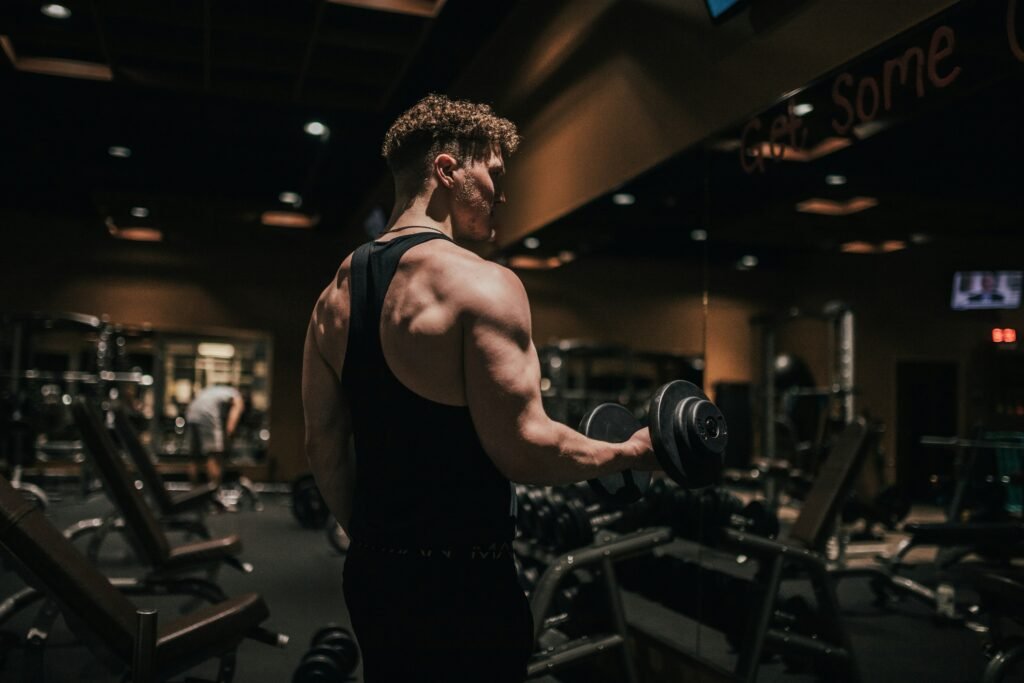
How to Build Muscle: The Complete Guide to Training, Nutrition and Recovery
Author: Malik Mohsin Saleem Khan
Building muscle is one of the most common goals among people who start strength training. Whether you want to look more athletic, become stronger, improve your physical performance, or develop a healthier body composition, gaining muscle requires more than simply lifting weights.
Effective muscle growth depends on several factors working together. Resistance training provides the stimulus, nutrition supplies the energy and nutrients your body needs, and recovery gives your muscles an opportunity to adapt.
The process may sound complicated, but the fundamental principles are straightforward.
You need a consistent resistance-training program, enough productive training volume, appropriate progression, sufficient protein and calories, quality sleep, and patience.
This complete guide explains how to build muscle naturally and effectively. It covers the science and practical side of muscle growth, including workout planning, exercise selection, sets and repetitions, progressive overload, nutrition, protein intake, calorie balance, recovery, common mistakes, and long-term strategies for maximizing muscle development.
What Does It Mean to Build Muscle?
Building muscle, commonly called muscle hypertrophy, refers to increasing the size of your skeletal muscles.
When you perform resistance training, your muscles experience mechanical tension and other forms of stress. Your body responds by adapting to the demands placed upon it.
With consistent training and adequate recovery, muscle fibers can become larger and stronger.
Muscle growth is not an overnight process.
Your results depend on factors such as:
Training consistency
Exercise selection
Training volume
Training intensity
Nutrition
Protein intake
Calorie intake
Sleep
Recovery
Genetics
Training experience
Beginners may experience noticeable improvements relatively quickly, while experienced lifters generally need more precise programming and patience.
How Muscle Growth Happens
Understanding the basic process can help you avoid common fitness myths.
When you perform resistance exercises, your muscles are exposed to a challenging workload. Your body then responds by adapting to future demands.
Several factors contribute to muscle growth, but mechanical tension created by challenging resistance exercise is particularly important.
Over time, repeatedly providing an appropriate training stimulus can encourage your muscles to adapt and grow.
However, training alone is not enough.
If you train hard but consistently fail to eat enough nutrients or recover adequately, your progress can suffer.
This is why muscle building is best viewed as a combination of three major components:
Training + Nutrition + Recovery
All three matter.
The Three Pillars of Muscle Growth
Training
Resistance training tells your body that it needs to become stronger and more capable.
Nutrition
Food supplies calories, protein, carbohydrates, fats, vitamins, minerals, and fluids that support training and recovery.
Recovery
Rest and sleep provide the environment in which your body can recover and adapt to training.
Neglecting one of these areas can limit your overall results.
How Often Should You Train to Build Muscle?
Training frequency refers to how often you train a particular muscle group.
There is no single perfect schedule for everyone.
Many people can build muscle effectively by training major muscle groups approximately two times per week, although different frequencies can work depending on how your total weekly training volume is distributed.
Popular approaches include:
Full-body workouts
Upper/lower splits
Push/pull/legs
Body-part-focused routines
Full-Body Training
A full-body workout trains multiple major muscle groups during the same session.
For example:
Squat
Bench press
Row
Romanian deadlift
Shoulder press
Core exercise
This can be particularly useful for beginners because each muscle group receives regular training without requiring many gym days.
Upper/Lower Split
An upper/lower routine divides workouts between the upper and lower body.
For example:
Monday: Upper body
Tuesday: Lower body
Thursday: Upper body
Friday: Lower body
This approach can provide a good balance between training frequency and recovery.
Push/Pull/Legs
A push/pull/legs routine divides training into:
Pushing muscles and movements
Pulling muscles and movements
Legs
This approach can work well for people who enjoy training more frequently.
The best split is the one that allows you to train consistently while managing fatigue and recovery.
How Many Sets Should You Do to Build Muscle?
Training volume is one of the most important variables in a muscle-building program.
Volume can be considered in several ways, but a simple practical measurement is the number of challenging sets performed for a muscle group over time.
There is no universal number that guarantees maximum growth.
A beginner can often make excellent progress with a relatively modest amount of training.
For example, you might begin with approximately 6–10 challenging sets per muscle group per week and gradually increase volume as you gain experience and determine what you can recover from.
More advanced lifters may use higher volumes.
However, more is not always better.
If additional sets produce excessive fatigue and reduce your ability to perform quality training, they may not improve your results.
How Many Repetitions Are Best for Muscle Growth?
Muscle can grow across a relatively broad range of repetitions when sets are sufficiently challenging.
Common muscle-building programs often use approximately 6–15 repetitions per set, although higher and lower repetition ranges can also be useful.
For example:
Heavy compound exercises: 5–10 repetitions
Moderate resistance exercises: 8–12 repetitions
Isolation exercises: 10–15+ repetitions
The key is not simply the number printed on your workout plan.
You need to use an appropriate resistance and perform controlled, challenging sets.
How Close to Failure Should You Train?
Training to failure means continuing a set until you cannot complete another repetition with proper technique.
You do not need to take every set to complete failure to build muscle.
Instead, many people can make excellent progress by finishing sets with some repetitions still available.
This is often described using the concept of reps in reserve, or RIR.
For example:
3 RIR: You believe you could perform approximately three more good repetitions.
2 RIR: You could perform approximately two more.
1 RIR: You could probably perform one more.
0 RIR: You have reached muscular failure.
Beginners can generally benefit from learning how challenging sets feel rather than attempting to reach failure constantly.
Progressive Overload: The Key to Continued Growth
Your body adapts to repeated training.
If you perform exactly the same workout with exactly the same resistance forever, progress may eventually slow.
Progressive overload involves gradually increasing the training challenge.
You can do this by:
Increasing resistance
Increasing repetitions
Adding sets
Improving exercise technique
Increasing range of motion
Improving control
Using more challenging exercise variations
For example:
Week 1: 20 kg × 8 reps
Week 2: 20 kg × 10 reps
Week 3: 20 kg × 12 reps
Week 4: 22.5 kg × 8 reps
This is one simple way to progressively increase training demands.
You do not need to increase the weight every workout.
Choosing the Best Exercises for Muscle Growth
A good muscle-building program should include exercises that allow you to train your target muscles effectively and progress over time.
Chest
Useful exercises include:
Bench press
Dumbbell press
Incline press
Push-ups
Machine chest press
Cable flyes
Back
Useful exercises include:
Pull-ups
Lat pulldowns
Barbell rows
Dumbbell rows
Cable rows
Chest-supported rows
Shoulders
Useful exercises include:
Overhead press
Dumbbell shoulder press
Lateral raises
Rear-delt exercises
Legs
Useful exercises include:
Squats
Leg presses
Romanian deadlifts
Lunges
Split squats
Leg curls
Calf raises
Arms
For the biceps:
Dumbbell curls
Barbell curls
Hammer curls
For the triceps:
Triceps pushdowns
Overhead extensions
Close-grip pressing movements
You don’t need to perform every exercise listed.
Choose a manageable selection and progressively improve your performance.
Compound Exercises and Isolation Exercises
Both compound and isolation movements can play a role in muscle building.
Compound Exercises
Compound movements involve multiple joints and muscle groups.
Examples include:
Squats
Deadlifts
Bench presses
Rows
Pull-ups
Overhead presses
They allow you to train several muscles efficiently.
Isolation Exercises
Isolation movements emphasize a particular muscle or movement.
Examples include:
Biceps curls
Triceps extensions
Leg extensions
Leg curls
Lateral raises
Calf raises
Isolation exercises can be useful for adding targeted training volume.
A balanced program can include both.
How to Build a Muscle-Gain Workout Plan
A good muscle-building workout does not need to contain 15 different exercises.
A simple session could include:
One major lower-body movement
One horizontal pushing movement
One pulling movement
One hip-hinge movement
One shoulder movement
One or two targeted isolation exercises
For example:
Squat: 3 × 6–10
Bench press: 3 × 6–10
Lat pulldown: 3 × 8–12
Romanian deadlift: 3 × 8–12
Lateral raise: 2 × 10–15
Biceps curl: 2 × 10–15
Triceps pushdown: 2 × 10–15
This is simply an example. Your exact workout should be adjusted according to your training experience, goals, equipment, and ability.
The Importance of Exercise Technique
Good technique helps you control the resistance and train the intended movement effectively.
When learning an exercise:
Start with manageable weight.
Learn the correct movement pattern.
Use controlled repetitions.
Avoid unnecessary momentum.
Maintain stable positioning.
Increase resistance gradually.
Don’t sacrifice technique simply to lift a heavier number.
A lighter weight performed well can be far more useful than a heavier weight handled poorly.
Nutrition for Building Muscle
Training provides the stimulus for muscle growth, but nutrition supplies the resources your body needs to support that process.
A muscle-building diet should provide sufficient:
Calories
Protein
Carbohydrates
Dietary fats
Vitamins
Minerals
Fluids
You don’t need a complicated diet.
Start by improving the quality and consistency of your meals.
How Much Protein Do You Need to Build Muscle?
Protein is particularly important for people who perform resistance training.
A commonly used evidence-based range for people trying to build muscle is approximately 1.6–2.2 grams of protein per kilogram of body weight per day.
For example, a person weighing 70 kg might aim for approximately:
112–154 grams of protein per day.
Individual requirements can vary, and more protein is not automatically better.
Instead of trying to consume your entire daily protein intake in one meal, distributing protein across several meals can be a practical approach.
High-Protein Foods
Useful protein sources include:
Eggs
Chicken
Fish
Lean beef
Milk
Greek yogurt
Cottage cheese
Lentils
Beans
Chickpeas
Tofu
Soy products
Nuts and seeds
Choose foods that fit your dietary preferences and budget.
Do You Need a Calorie Surplus to Build Muscle?
A calorie surplus means consuming more calories than your body uses.
A modest calorie surplus can support muscle growth by providing additional energy for training and tissue development.
However, you do not need to dramatically overeat.
A large surplus can result in unnecessary fat gain.
A more controlled approach is to increase food intake modestly and monitor your progress.
If your body weight and gym performance are not improving over time, you may need to increase your calorie intake.
What Should You Eat Before a Workout?
A pre-workout meal can provide energy for training.
A useful meal may contain carbohydrates and protein.
Examples include:
Oats with milk and fruit
Rice with chicken
Yogurt with fruit
Eggs with whole-grain bread
Banana with yogurt
A balanced sandwich
The ideal timing depends on your schedule and digestion.
You do not need a complicated pre-workout formula.
What Should You Eat After a Workout?
A post-workout meal can provide protein and carbohydrates to support recovery and replenish energy.
Good options include:
Chicken and rice
Eggs and potatoes
Fish with vegetables and rice
Yogurt with fruit and oats
Lentils with rice
Milk and a balanced meal
The overall quality of your daily nutrition matters more than obsessing over a narrow post-workout timing window.
Carbohydrates and Muscle Growth
Carbohydrates are an important source of energy.
They can support training performance by helping provide fuel for physical activity.
Good carbohydrate sources include:
Rice
Potatoes
Oats
Whole-grain bread
Pasta
Fruits
Beans
Lentils
Other whole grains
You don’t need to eliminate carbohydrates to build muscle.
Dietary Fats and Muscle Building
Dietary fats are also important components of a balanced diet.
Sources include:
Nuts
Seeds
Avocados
Olive oil
Eggs
Fatty fish
Nut butters
Rather than eliminating fat, focus on consuming appropriate amounts as part of a balanced diet.
How Much Water Should You Drink?
Hydration supports normal body function and physical performance.
Your fluid needs depend on factors such as:
Body size
Temperature
Exercise duration
Sweat rate
Diet
Activity level
Drink regularly throughout the day and pay attention to your thirst and hydration status.
During long or intense workouts, particularly in hot conditions, fluid needs can increase.
The Role of Sleep in Muscle Growth
You can have an excellent training program and a strong diet, but poor sleep can make recovery more difficult.
Sleep supports many physiological processes involved in health, recovery, and physical performance.
Try to establish consistent sleep habits.
Practical strategies include:
Maintaining a regular sleep schedule
Creating a relaxing nighttime routine
Keeping your bedroom comfortable
Reducing unnecessary screen exposure before bed
Allowing enough time for sleep
For most adults, approximately seven to nine hours of sleep per night is commonly recommended.
Why Rest Days Matter
Muscle growth does not require you to train every day.
Rest days allow your body to recover from training.
A rest day does not necessarily mean sitting completely still.
You can perform light activities such as:
Walking
Gentle mobility work
Easy cycling
Recreational activities
The goal is to avoid unnecessarily adding significant fatigue between demanding workouts.
How Long Does It Take to Build Muscle?
Muscle growth takes time.
Beginners may notice changes in strength and muscle fullness relatively quickly, but substantial physical transformation generally requires months or years of consistent training.
Your rate of progress depends on:
Genetics
Training experience
Nutrition
Sleep
Training quality
Age
Hormonal factors
Starting body composition
Consistency
Avoid comparing your progress to fitness influencers or professional athletes.
Many images online are affected by lighting, posing, editing, genetics, and years of training.
How to Track Muscle-Building Progress
The scale is only one measurement.
You can monitor progress using several methods.
Track Your Training
Record:
Exercise
Weight
Sets
Repetitions
Workout date
Take Progress Photos
Taking photographs under similar lighting and conditions can help you notice gradual changes.
Measure Body Circumference
You can periodically measure areas such as:
Arms
Chest
Waist
Thighs
Monitor Strength
If you can gradually lift more weight or perform more repetitions with good technique, that can indicate meaningful progress.
Using several measurements provides a more complete picture than relying on body weight alone.
Common Muscle-Building Mistakes
Eating Too Little
If your calorie intake is consistently too low, gaining muscle can become more difficult.
Not Eating Enough Protein
A diet lacking adequate protein may make it harder to support muscle growth.
Training Without Progression
Doing the same workout with the same resistance forever can eventually limit progress.
Doing Too Much Volume
More sets do not automatically mean more muscle.
Excessive volume can create unnecessary fatigue.
Changing Programs Too Frequently
You need enough consistency to determine whether a program is working.
Ignoring Recovery
Training hard while sleeping poorly and constantly accumulating fatigue can interfere with performance.
Focusing Only on Supplements
Supplements cannot compensate for poor training, inadequate nutrition, or insufficient sleep.
Expecting Fast Results
Muscle growth is a gradual process.
Consistency over months and years matters far more than a few intense weeks.
Do You Need Supplements to Build Muscle?
No.
Supplements are optional.
A strong foundation should come from:
Progressive resistance training
Adequate calories
Sufficient protein
Balanced nutrition
Quality sleep
Recovery
Some supplements may be useful in specific circumstances, but they should not replace the fundamentals.
If you are considering supplements, especially if you have a medical condition or take medication, consult an appropriate healthcare professional.
Is Creatine Useful for Muscle Growth?
Creatine is one of the most extensively studied sports supplements and can improve performance in certain high-intensity activities.
Creatine monohydrate is commonly used by people participating in resistance training.
However, supplementation is not necessary to begin building muscle.
If you are considering creatine or any other supplement, understand how it works, use reputable products, and seek professional guidance if you have health concerns.
Building Muscle Naturally
You do not need extreme methods to build muscle.
A natural muscle-building approach can be based on:
Progressive resistance training
Adequate protein
Sufficient calories
Quality carbohydrates and fats
Consistent sleep
Proper hydration
Recovery
Long-term consistency
Avoid products or programs that promise dramatic muscle growth within a very short period.
Sustainable progress usually looks much slower than advertisements suggest.
How to Build Muscle at Home
You don’t necessarily need a commercial gym.
A home muscle-building routine can use:
Push-ups
Squats
Bulgarian split squats
Lunges
Glute bridges
Resistance-band rows
Resistance-band presses
Pull-ups
Dumbbell exercises
As you become stronger, adding adjustable dumbbells, resistance bands, or other equipment can increase the available resistance.
The main challenge with home training is ensuring that the resistance can continue increasing as your strength improves.
How to Build Muscle as a Beginner
Beginners have a major advantage: almost any well-structured resistance-training program can produce progress when they are new to training.
Focus on:
Learning fundamental movements
Training consistently
Eating enough protein
Getting adequate calories
Sleeping well
Tracking progress
Gradually increasing resistance
You don’t need advanced techniques such as drop sets, supersets, forced repetitions, or highly specialized training methods.
Master the fundamentals first.
How to Build Muscle Without Gaining Too Much Fat
Muscle gain generally becomes easier when sufficient calories and nutrients are available, but gaining weight too quickly can result in more fat accumulation.
A controlled approach is usually more practical.
Monitor:
Body weight
Waist measurement
Gym performance
Progress photographs
Overall appearance
If your weight is increasing rapidly while strength and muscle measurements are not improving proportionally, your calorie surplus may be larger than necessary.
What Happens When You Stop Strength Training?
If you stop resistance training for an extended period, your strength and muscle size may gradually decline.
The exact rate varies depending on factors such as training history, activity levels, nutrition, and how long you stop.
This is another reason consistency matters.
However, taking a short break because of travel, illness, or normal life circumstances does not mean your entire progress is lost.
When you return, gradually rebuild your training volume and intensity.
How to Stay Motivated During a Muscle-Building Journey
Motivation can fluctuate.
Instead of depending entirely on motivation, create a system.
Set Realistic Goals
Examples include:
Adding 10 kg to a major lift over time
Completing three workouts every week
Increasing your repetitions
Gaining a controlled amount of body weight
Improving your exercise technique
Create a Routine
Train at consistent times whenever possible.
Keep a Training Log
Seeing your numbers improve can provide motivation.
Focus on the Process
Instead of asking:
“Why don’t I look different yet?”
Ask:
“Did I train consistently this week?”
The process eventually produces the results.
A Sample Weekly Muscle-Building Routine
Here is a simple four-day example.
Monday – Upper Body
Bench press – 3 × 6–10
Lat pulldown – 3 × 8–12
Dumbbell shoulder press – 3 × 8–12
Cable row – 3 × 8–12
Biceps curls – 2 × 10–15
Triceps extensions – 2 × 10–15
Tuesday – Lower Body
Squat – 3 × 6–10
Romanian deadlift – 3 × 8–12
Leg press – 3 × 8–12
Leg curl – 2 × 10–15
Calf raises – 3 × 10–15
Plank – 2–3 sets
Wednesday – Recovery
Take a rest day or perform light activity.
Thursday – Upper Body
Incline dumbbell press – 3 × 8–12
Pull-ups or lat pulldown – 3 × 8–12
Seated cable row – 3 × 8–12
Lateral raises – 3 × 10–15
Biceps curls – 2 × 10–15
Triceps pushdowns – 2 × 10–15
Friday – Lower Body
Deadlift or Romanian deadlift – 3 × 6–10
Bulgarian split squat – 3 × 8–12
Leg extension – 2 × 10–15
Leg curl – 2 × 10–15
Calf raises – 3 × 10–15
Core exercise – 2–3 sets
Weekend – Recovery
Use the weekend for rest, walking, recreational activities, or other light movement.
This is only an example and should be adjusted according to individual ability and training experience.
Frequently Asked Questions About Building Muscle
How Can I Build Muscle Quickly?
There is no safe shortcut that guarantees rapid muscle growth.
The most reliable approach is consistent resistance training, adequate nutrition, sufficient protein, and good recovery.
How Many Days a Week Should I Train for Muscle Growth?
Many people can build muscle effectively with three to five resistance-training sessions per week, depending on how the workouts are structured and how well they recover.
Can I Build Muscle Without Going to the Gym?
Yes. Home workouts using bodyweight exercises, resistance bands, dumbbells, and other equipment can build muscle, particularly for beginners.
Can Skinny People Build Muscle?
Yes. People with naturally smaller frames can build muscle through progressive resistance training and appropriate nutrition.
If gaining weight is difficult, increasing calorie intake gradually can help.
How Much Protein Should I Eat to Build Muscle?
A commonly used range for people engaged in resistance training is approximately 1.6–2.2 grams of protein per kilogram of body weight per day.
Individual needs can vary.
Do I Need to Lift Heavy Weights to Build Muscle?
No. Muscle growth can occur across a broad range of resistance levels when exercises are sufficiently challenging and performed with appropriate technique.
Is It Better to Train in the Morning or at Night?
The best training time is the one that fits your schedule and allows you to train consistently.
Can I Build Muscle While Losing Fat?
It can be possible, particularly for beginners, people returning to training, and individuals with higher levels of body fat.
However, the ease of simultaneously gaining muscle and losing fat varies significantly between individuals.
How Long Should I Rest Between Workouts?
Recovery requirements vary according to training volume, intensity, muscle group, sleep, nutrition, and individual factors.
Allow sufficient recovery so you can perform your next workout effectively.
The Long-Term Approach to Building Muscle
The biggest secret to building muscle isn’t a secret exercise or supplement.
It is consistency.
You need to repeatedly provide your body with an appropriate training stimulus while giving it enough food and recovery to adapt.
Think in terms of months and years rather than days.
Your training may look like this:
Train → Recover → Adapt → Progress → Repeat
Over time, small improvements accumulate.
One additional repetition becomes another.
A small increase in resistance becomes a stronger lift.
A consistent meal becomes a better nutritional habit.
One good night’s sleep becomes a healthier sleep schedule.
These small decisions can eventually produce significant changes.
Final Thoughts
Building muscle is a long-term process, but it does not have to be complicated.
Start with a well-structured resistance-training program. Focus on fundamental exercises. Use appropriate resistance. Perform challenging sets with good technique. Gradually increase the demands placed on your muscles.
At the same time, eat enough food to support your goals and prioritize adequate protein. Include carbohydrates and healthy fats as part of a balanced diet. Stay hydrated and give your body enough time to recover.
Don’t become distracted by complicated programs, miracle supplements, or unrealistic promises.
The fundamentals work.
Train consistently. Eat appropriately. Recover properly. Track your progress. Be patient.
If you follow those principles for long enough, your body will have repeated opportunities to adapt and become stronger.
Muscle building is not about what you do for one week. It is about what you consistently do for many months and years.
Start with the basics, build good habits, and gradually become better at the process.