
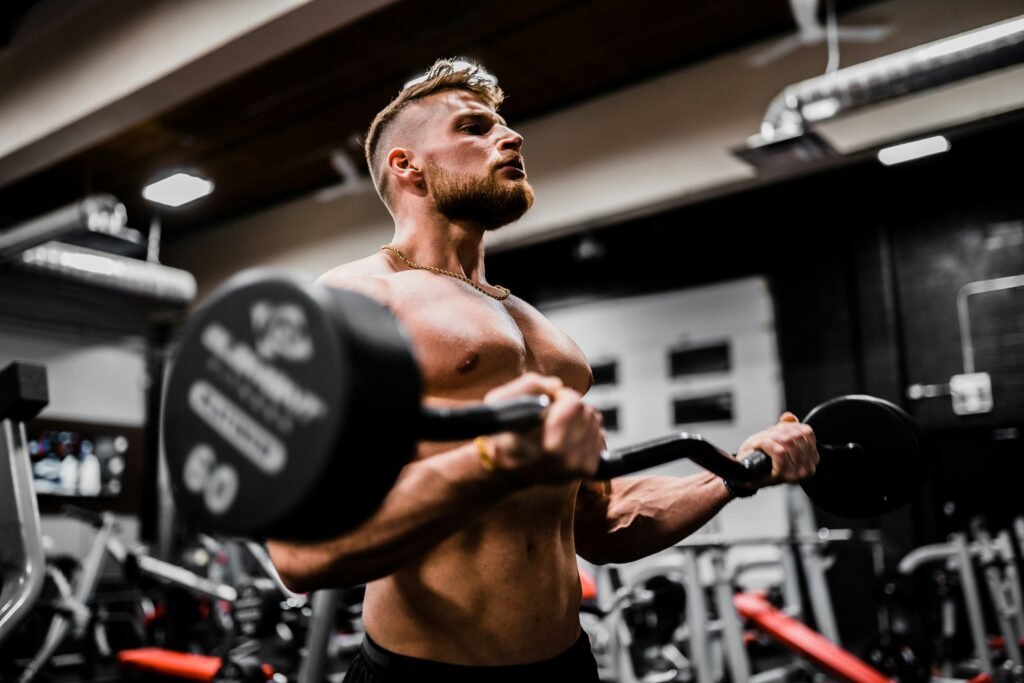
Strength Training for Beginners: How to Build Strength the Right Way
Author: Malik Mohsin Saleem Khan
Starting strength training can be one of the most effective ways to improve your physical fitness, build muscle, increase strength, and become more capable in everyday life. However, walking into a gym for the first time can be intimidating. There are countless machines, free weights, exercises, workout programs, and opinions about the “right” way to train.
The truth is that beginners do not need a complicated program.
You do not need to lift extremely heavy weights, spend hours in the gym, or follow an advanced bodybuilding routine to make progress. What you need is a solid understanding of the fundamentals, proper exercise technique, a manageable training schedule, adequate nutrition, and enough patience to allow your body to adapt.
Strength training is not only for bodybuilders or athletes. People of different ages and fitness levels can use resistance exercises as part of a balanced fitness routine.
This complete guide explains strength training for beginners from the ground up. You will learn what strength training is, why it matters, how to choose exercises, how often to train, how many sets and repetitions to perform, how to progress safely, and which common mistakes to avoid.
What Is Strength Training?
Strength training is a form of exercise in which your muscles work against resistance.
That resistance can come from several sources, including:
Your own body weight
Dumbbells
Barbells
Resistance bands
Cable machines
Weight machines
Kettlebells
Other appropriate forms of resistance
The purpose is to challenge your muscles so your body can gradually adapt to the training stimulus.
Strength training can improve your ability to push, pull, squat, lift, carry, and stabilize your body.
Although strength training can help build muscle, gaining muscle and maximizing strength are not exactly the same goal. A person can become significantly stronger through improvements in technique, coordination, and nervous-system efficiency, even before major changes in muscle size occur.
For beginners, however, many benefits can occur at the same time.
You may become stronger while also developing muscle, improving movement quality, and increasing your confidence with exercise.
Why Should Beginners Do Strength Training?
Strength training provides benefits that go beyond appearance.
A well-designed resistance-training routine can help you become more physically capable and support your overall fitness.
Build Muscular Strength
The most obvious benefit is increased strength.
As you consistently expose your muscles to resistance, your body adapts to the challenge.
Over time, activities that once felt difficult may become easier.
This can translate into everyday activities such as:
Carrying groceries
Moving furniture
Climbing stairs
Picking up objects
Playing sports
Performing household tasks
Maintaining better physical independence
Build and Maintain Muscle
Resistance training can provide a stimulus for muscle growth when combined with appropriate nutrition and recovery.
Muscle is metabolically active tissue and plays an important role in movement and physical function.
For beginners, building muscle doesn’t require extreme bodybuilding techniques.
Basic exercises performed consistently can provide an excellent foundation.
Improve Bone and Joint Support
Regular resistance exercise places mechanical demands on the body that can contribute to maintaining strong bones and supporting physical function.
It can also strengthen muscles surrounding joints, potentially improving stability and movement capacity.
Improve Body Composition
Strength training can help support changes in body composition.
Rather than focusing only on losing body weight, many people benefit from thinking about maintaining or building muscle while managing body fat.
This is one reason resistance training is often included in weight-management programs.
Improve Confidence and Physical Capability
There is also a psychological component to getting stronger.
Being able to perform an exercise that previously seemed difficult can provide a meaningful sense of achievement.
Progress doesn’t always need to be measured by appearance.
Adding weight to a lift, performing another repetition, or completing a workout with better technique can all represent progress.
Understanding the Main Types of Strength Training
There is more than one way to perform resistance training.
Beginners should understand the basic options before choosing a workout routine.
Bodyweight Training
Bodyweight exercises use your own body as resistance.
Examples include:
Squats
Push-ups
Lunges
Glute bridges
Planks
Step-ups
Assisted pull-ups
Bodyweight training can be an excellent starting point because it requires little equipment.
Free Weights
Free weights include equipment such as dumbbells, barbells, and kettlebells.
They allow you to move through space rather than following the fixed path of a machine.
Common beginner exercises include:
Dumbbell squats
Dumbbell rows
Dumbbell presses
Romanian deadlifts
Goblet squats
Kettlebell exercises
Resistance Machines
Weight machines guide the movement along a predetermined path.
They can be useful for beginners because they may make certain exercises easier to understand.
Machines can also allow you to train specific muscle groups without requiring as much stabilization as some free-weight exercises.
Resistance Bands
Resistance bands are portable, inexpensive, and useful for many exercises.
They can be used for:
Rows
Presses
Lateral movements
Glute exercises
Shoulder exercises
Assistance exercises
They are particularly useful for home workouts and travel.
Learn the Fundamental Movement Patterns
Instead of memorizing dozens of exercises, beginners can focus on learning fundamental movement patterns.
These patterns form the foundation of many strength-training programs.
Squat
Squatting involves bending and straightening the hips and knees while controlling the position of your body.
Examples include:
Bodyweight squat
Goblet squat
Dumbbell squat
Barbell squat
Hinge
The hip hinge involves moving primarily through the hips while maintaining control of the spine.
Examples include:
Romanian deadlift
Deadlift
Kettlebell deadlift
Good morning
Push
Pushing exercises involve moving resistance away from your body.
Examples include:
Push-ups
Dumbbell bench press
Shoulder press
Machine chest press
Pull
Pulling exercises involve moving resistance toward your body.
Examples include:
Dumbbell rows
Cable rows
Lat pulldowns
Assisted pull-ups
Lunge
Lunging exercises train the legs individually or in alternating patterns.
Examples include:
Reverse lunges
Forward lunges
Walking lunges
Split squats
Carry
Carrying resistance challenges your grip, posture, and ability to stabilize your body.
Examples include:
Farmer carries
Suitcase carries
Loaded carries
Brace
Bracing involves creating stability through your trunk.
Exercises such as planks and controlled loaded movements can train this ability.
Learning these patterns gives you a strong foundation for more advanced training.
How Often Should Beginners Strength Train?
Beginners generally do not need to strength train every day.
Your muscles and other tissues need time to recover between challenging sessions.
A practical starting point is often two or three full-body strength workouts per week.
For example:
Monday: Full-body strength workout
Tuesday: Rest or light activity
Wednesday: Full-body strength workout
Thursday: Rest
Friday: Full-body strength workout
Saturday: Optional walking or recreational activity
Sunday: Rest
This schedule provides regular exposure to strength training while allowing recovery between sessions.
Your ideal schedule depends on your experience, goals, lifestyle, recovery, and other physical activities.
The Best Beginner Strength Training Routine
A beginner program should focus on fundamental exercises rather than unnecessary complexity.
Here is an example of a simple full-body workout.
Beginner Workout
1. Goblet Squat
2 sets of 8–12 repetitions
2. Incline Push-Up
2 sets of 6–12 repetitions
3. Dumbbell or Resistance-Band Row
2 sets of 8–12 repetitions
4. Romanian Deadlift With Light Dumbbells
2 sets of 8–12 repetitions
5. Reverse Lunge
2 sets of 6–10 repetitions per leg
6. Plank
2 sets of 15–30 seconds
Start with a resistance that allows you to maintain good technique.
You can perform this routine two or three times per week with recovery days between sessions.
The goal during the first few weeks is not to see how much weight you can lift.
The goal is to learn the movements and build consistency.
How to Choose the Right Weight
Choosing a weight can be confusing for beginners.
The correct starting weight is not necessarily the heaviest weight you can lift.
Instead, choose a resistance that allows you to perform the exercise with controlled technique.
A suitable beginner weight should generally feel challenging toward the end of a set without causing your technique to break down.
For example, if you plan to perform 10 repetitions, you should be able to complete the repetitions with good control.
If you cannot maintain proper form after the first few repetitions, the resistance may be too heavy.
If you can perform many more repetitions without feeling challenged, the resistance may be too light.
What Are Sets and Repetitions?
Understanding basic workout terminology makes strength training much easier.
A repetition, or rep, is one complete performance of an exercise.
For example, performing one complete squat is one repetition.
A set is a group of repetitions performed together.
If you perform 10 squats, rest, and then perform another 10 squats, you have completed two sets of 10 repetitions.
A beginner workout might therefore say:
Squat – 2 × 10
This means two sets of 10 repetitions.
How Many Repetitions Should Beginners Perform?
There is no single repetition range that is perfect for every exercise or goal.
For many beginner strength exercises, a moderate repetition range can make it easier to learn technique while building strength and muscle.
For example:
Large compound movements: approximately 6–12 repetitions
Many isolation exercises: approximately 8–15 repetitions
Bodyweight exercises: often 6–20 repetitions depending on difficulty
Planks: measured in time rather than repetitions
These are guidelines rather than strict rules.
Exercise selection, resistance, technique, training frequency, and progression all matter.
How Long Should a Strength Workout Last?
A beginner strength session does not need to last two hours.
A focused workout can often be completed in approximately 30–60 minutes depending on the number of exercises, rest periods, and training experience.
A basic session could include:
5–10 minutes of warm-up
25–40 minutes of strength training
A few minutes of easy movement afterward
Quality is more important than simply spending more time in the gym.
Why Proper Form Matters
Technique is one of the most important aspects of strength training for beginners.
When learning a new movement, start with a manageable resistance and focus on control.
Good technique can help you:
Perform the intended movement effectively
Maintain control of the resistance
Reduce unnecessary strain
Build better movement habits
Progress more confidently
Avoid treating heavier weight as automatically better.
If increasing the weight causes your technique to deteriorate significantly, you may be progressing too quickly.
What Is Progressive Overload?
Progressive overload is the gradual process of increasing the challenge placed on your body.
Without progressively challenging your muscles, improvements can eventually slow down.
You can create progressive overload in several ways.
Increase the Weight
If you can comfortably complete your target repetitions with excellent technique, you may eventually increase the resistance slightly.
Increase Repetitions
Instead of immediately adding weight, you can perform another repetition with the same resistance.
For example:
Week 1: 8 repetitions
Week 2: 9 repetitions
Week 3: 10 repetitions
Add a Set
You can sometimes increase the training stimulus by adding another set.
Improve Technique
Better technique can itself represent meaningful progress.
A controlled repetition is more valuable than a rushed repetition performed with poor form.
Increase Range of Motion
When appropriate, gradually improving your comfortable range of motion can make an exercise more challenging.
The important principle is gradual progression.
Understanding Rest Between Sets
Rest periods allow you to partially recover before performing the next set.
The appropriate rest period depends on the exercise and your goals.
For beginners, approximately 1–3 minutes can be useful for many resistance exercises.
You may need more rest after demanding compound movements.
You may need less rest for lighter exercises.
Don’t feel pressured to rush.
If you are breathing heavily and your technique has not recovered, taking additional time can be reasonable.
Should Beginners Train Every Muscle Separately?
Not necessarily.
A beginner can make excellent progress with full-body workouts that train multiple muscle groups during each session.
For example, a squat can train several lower-body muscles simultaneously, while a row can train muscles involved in pulling.
As your training experience develops, you can experiment with more specialized routines.
However, beginners generally benefit from mastering fundamental movements before worrying about highly complicated muscle-group splits.
Compound Exercises vs. Isolation Exercises
Strength exercises are often categorized as compound or isolation movements.
Compound Exercises
Compound exercises involve movement at multiple joints.
Examples include:
Squats
Deadlifts
Push-ups
Bench presses
Rows
Lunges
Overhead presses
These exercises can train multiple muscle groups simultaneously.
Isolation Exercises
Isolation exercises generally emphasize a specific muscle or joint movement.
Examples include:
Biceps curls
Triceps extensions
Leg curls
Calf raises
Lateral raises
Both categories can be useful.
For beginners, compound movements can provide an efficient foundation, while isolation exercises can be added when appropriate.
Strength Training and Cardio
You do not have to choose between strength training and cardio.
Both can contribute to overall fitness.
Strength training primarily focuses on muscular strength and resistance, while cardiovascular exercise challenges your heart and respiratory system.
A balanced weekly routine could include:
2–3 strength workouts
Several walking sessions
Optional cycling, swimming, jogging, or sports
Mobility work
Recovery days
The exact combination should match your goals and current fitness level.
Nutrition for Strength Training Beginners
Training is only one part of building strength.
Your body also needs adequate nutrition to support normal function and recovery.
Focus on a balanced diet that includes:
Protein-rich foods
Fruits
Vegetables
Whole grains
Healthy fats
Dairy or suitable alternatives
Adequate fluids
Protein
Protein provides amino acids that the body uses for various functions, including maintaining and repairing muscle tissue.
Useful protein sources include:
Eggs
Chicken
Fish
Lean meat
Milk
Yogurt
Beans
Lentils
Chickpeas
Tofu
Nuts and seeds
You do not need to consume enormous amounts of protein simply because you started lifting weights.
A balanced diet that provides sufficient nutrients should be the foundation of your approach.
Carbohydrates
Carbohydrates can provide an important source of energy for physical activity.
Foods such as:
Rice
Potatoes
Oats
Whole-grain bread
Fruits
Beans
can fit into a balanced diet.
Dietary Fats
Healthy sources of dietary fat can include:
Nuts
Seeds
Avocados
Olive oil
Fatty fish
A varied diet is generally more useful than eliminating entire food groups without a specific reason.
Do Beginners Need Protein Supplements?
No.
Protein supplements are convenient for some people, but they are not required for strength training.
A person can obtain protein from ordinary foods.
If you struggle to meet your nutritional needs through food, a supplement may be convenient, but it should not replace a balanced diet.
If you have a medical condition or specific dietary needs, discuss nutrition and supplementation with an appropriate healthcare professional.
The Importance of Recovery
Your workout is the stimulus.
Recovery is the period during which your body adapts to that stimulus.
Important recovery factors include:
Sleep
Nutrition
Hydration
Rest days
Appropriate training intensity
Stress management
If you constantly train without allowing enough recovery, your performance may suffer.
More training is not automatically better.
Better training combined with appropriate recovery is a more sustainable approach.
Common Strength Training Mistakes Beginners Should Avoid
Lifting Too Heavy
Trying to impress other people by lifting weights that are too heavy can interfere with technique and progression.
Start lighter.
Skipping the Warm-Up
A few minutes of gradual preparation can help you transition into your workout.
Changing Your Workout Every Week
Constantly switching exercises makes it difficult to determine whether you are actually progressing.
Stick with basic movements long enough to learn and improve them.
Ignoring Rest
Rest between sets and between workouts matters.
Training Through Serious Pain
Muscle fatigue and normal exercise discomfort are not the same thing as significant pain.
If something feels seriously wrong, stop the exercise and seek appropriate professional advice.
Comparing Yourself to Advanced Lifters
Someone who has trained for years has a completely different starting point.
Your goal should be to improve your own performance.
Expecting Immediate Results
Strength and muscle development take time.
Consistency is more important than trying to force rapid results.
How to Track Your Strength Progress
Keeping a training log is one of the simplest ways to understand whether you are progressing.
Record:
Exercise
Weight or resistance
Repetitions
Sets
Date
Notes about technique or difficulty
For example:
Goblet Squat
Week 1: 10 kg × 8 reps
Week 2: 10 kg × 10 reps
Week 3: 12 kg × 8 reps
This gives you objective evidence of improvement.
You can also track non-strength improvements such as:
Better balance
Improved exercise technique
Greater endurance
Easier daily activities
Better workout consistency
When Should You Increase the Weight?
Don’t increase resistance simply because a new week has started.
Instead, consider increasing the weight when you can consistently perform your target repetitions with controlled technique and the current resistance no longer feels sufficiently challenging.
Increase gradually.
A small improvement repeated over many months can lead to substantial progress.
Can Beginners Build Muscle and Strength at Home?
Yes.
A beginner can perform many effective exercises at home.
A basic home setup might include:
Exercise mat
Resistance bands
Adjustable dumbbells
Stable exercise surface
Optional bench
Even without equipment, exercises such as squats, push-up variations, lunges, glute bridges, planks, and step-ups can provide a useful starting point.
As your strength improves, adding resistance can make home training more challenging.
How to Stay Consistent With Strength Training
Consistency is one of the biggest predictors of long-term progress.
You can make consistency easier by:
Choosing specific workout days.
Keeping sessions manageable.
Preparing your workout clothes in advance.
Tracking your training.
Avoiding unnecessary program complexity.
Setting realistic goals.
Celebrating small improvements.
Allowing recovery.
Choosing exercises you don’t hate.
Focusing on long-term progress.
You will not feel motivated every day.
The goal is to build a routine that continues even when motivation temporarily decreases.
A Beginner’s Eight-Week Strength Training Roadmap
Weeks 1–2: Learn the Basics
Focus on:
Learning exercise technique
Training two or three times per week
Using light-to-moderate resistance
Establishing a consistent schedule
Do not worry about lifting heavy.
Weeks 3–4: Build Consistency
Continue practicing the same fundamental exercises.
Start tracking your sets, repetitions, and resistance.
If an exercise becomes noticeably easier, make a small adjustment.
Weeks 5–6: Gradually Increase the Challenge
You can begin increasing resistance or repetitions where appropriate.
Continue prioritizing technique.
Weeks 7–8: Evaluate Your Progress
Look at your training log.
Ask yourself:
Am I stronger?
Can I perform more repetitions?
Can I use more resistance?
Has my technique improved?
Do workouts feel easier?
Am I more consistent?
Use this information to decide how to structure your next training phase.
Frequently Asked Questions About Strength Training for Beginners
Is Strength Training Safe for Beginners?
Strength training can be appropriate for beginners when exercises are selected appropriately and performed with suitable resistance and technique.
If you have an existing medical condition, injury, or concerns about starting exercise, seek guidance from an appropriate healthcare professional before beginning.
How Many Days a Week Should a Beginner Lift Weights?
Two or three strength-training sessions per week can be a practical starting point for many beginners.
Your schedule can be adjusted based on your goals, recovery, and other activities.
Can I Build Muscle as a Beginner?
Yes. Beginners can build muscle through consistent resistance training combined with appropriate nutrition and recovery.
The rate of progress varies from person to person.
Should I Lift Heavy Weights as a Beginner?
You don’t need to start with heavy weights.
Begin with a resistance that allows you to learn proper technique and gradually increase the challenge over time.
How Long Does It Take to Get Stronger?
Strength improvements can occur at different rates. Beginners may notice improvements in exercise performance relatively quickly, while longer-term progress requires consistent training.
Should I Do Strength Training Before or After Cardio?
Either order can work depending on your goals.
If strength development is your primary priority, performing strength training earlier in the session may help you give it your best effort.
Do I Need to Train to Failure?
No. Beginners do not need to take every set to complete muscular failure.
Controlled, challenging sets with appropriate technique can be effective.
Can I Do Strength Training Every Day?
It is generally unnecessary for beginners to perform hard full-body strength workouts every day.
Recovery between challenging sessions is important.
Signs That You Are Making Progress
Progress isn’t always obvious in the mirror.
You may notice:
More repetitions
Heavier weights
Better technique
Improved balance
Better endurance
Less difficulty with daily activities
Greater confidence
Improved consistency
These are meaningful achievements.
Fitness is not simply about changing how you look. It is also about improving what your body can do.
Your Beginner Strength Training Checklist
Before starting your program, make sure you have:
A realistic fitness goal
A manageable weekly schedule
Several basic exercises
Appropriate resistance
Comfortable workout clothing
A way to record your workouts
Enough time for recovery
A balanced approach to nutrition
Patience to allow progress to develop
Remember that your first workout does not need to be perfect.
You are learning.
Final Thoughts
Strength training can seem complicated when you first encounter the fitness world, but the fundamentals are surprisingly simple.
Choose basic exercises. Learn proper technique. Start with manageable resistance. Train consistently. Give your body enough recovery. Eat a balanced diet. Gradually increase the challenge.
You do not need to copy the workout of an advanced bodybuilder or spend hours in the gym.
Your first goal should be building a foundation.
Over time, that foundation can become stronger through progressive overload, better technique, consistent training, and appropriate recovery.
The weights you lift today may eventually become your warm-up weights. Exercises that initially feel difficult may become routine. Your confidence can grow alongside your physical strength.
Most importantly, remember that strength training is a long-term process.
There will be workouts where you perform exceptionally well and others where progress feels slow. That is normal.
Don’t judge your entire fitness journey based on one workout.
Focus on what you can control: showing up, training intelligently, recovering properly, and gradually becoming stronger.
Start light. Learn the movements. Progress gradually. Stay consistent.
That is how beginners can build strength the right way.